Mesothelioma trends in Pennsylvania based on data between 1990 and 2019
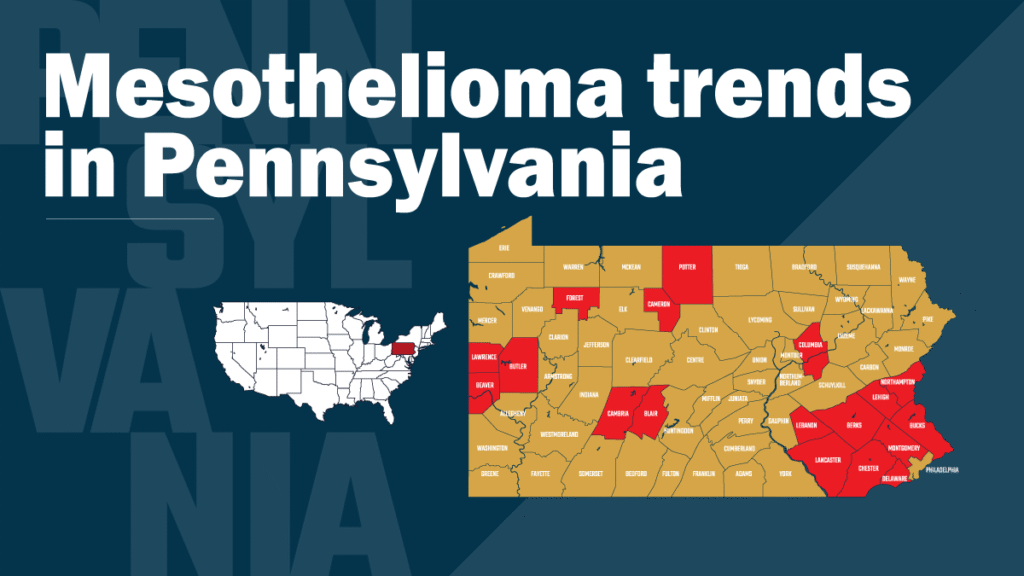
Scheduled for official publication in January 2026 and released online in December 2025, a new study examined trends in mesothelioma incidence in Pennsylvania based on data collected between 1990 and 2019.
The paper, Demographic disparities in temporal trends and geographic variations of malignant pleural and peritoneal mesothelioma incidence in Pennsylvania, 1990-2019, published in Cancer Causes Control analyzed trends of 6,000 cases of mesothelioma recorded in Pennsylvania’s cancer registry over a period of nearly 30 years.
Researchers found different patterns of distribution depending on the type of mesothelioma. While there are four different types of mesotheliomas generally recognized in the medical community, researchers in this study looked at the two most common ones: pleural mesothelioma (affecting the lining of the lung) and peritoneal mesothelioma (affecting the lining of the abdomen).
Of 6,000 cases analyzed, 85% were of pleural mesothelioma, and fewer than 10% were peritoneal, which is typical of the distribution between the two types in the general population.
Pleural mesothelioma patterns
Table of Contents
- 1 Pleural mesothelioma patterns
- 2 Peritoneal mesothelioma patterns
- 3 Geographic hotspots across Pennsylvania
- 4 Counties in Pennsylvania with an increased incidence of pleural mesothelioma
- 5 Counties in Pennsylvania with an increased incidence of peritoneal mesothelioma
- 6 Occupational asbestos exposure in Pennsylvania
- 7 About mesothelioma and asbestos
- 8 What this means going forward
- 9 About the Author
One of the most important findings is that pleural mesothelioma rates rose steadily through the 1990s and 2000s, followed by a clear decline beginning around 2005.
The authors suggest that this trend reflects the long-term impact of asbestos regulations that began in late 1970s and early 1980s. Because of the latency period between asbestos exposure and development of mesothelioma, the benefits of reduced exposure have only become evident in recent years.
Peritoneal mesothelioma patterns
Peritoneal mesothelioma remained rare and relatively stable overall, but the study identified two notable trends. Rates increased slightly among women and among people under age 60.
Unlike pleural mesothelioma, peritoneal mesothelioma appears to be less strongly linked to occupational asbestos exposure. Fewer patients report known workplace exposure, suggesting that environmental sources, household exposure, or other pathways may play a larger role for these patients.
Because peritoneal mesothelioma is even more rare than pleural, and cases analyzed were few, even small increases are important and warrant closer attention.
Geographic hotspots across Pennsylvania
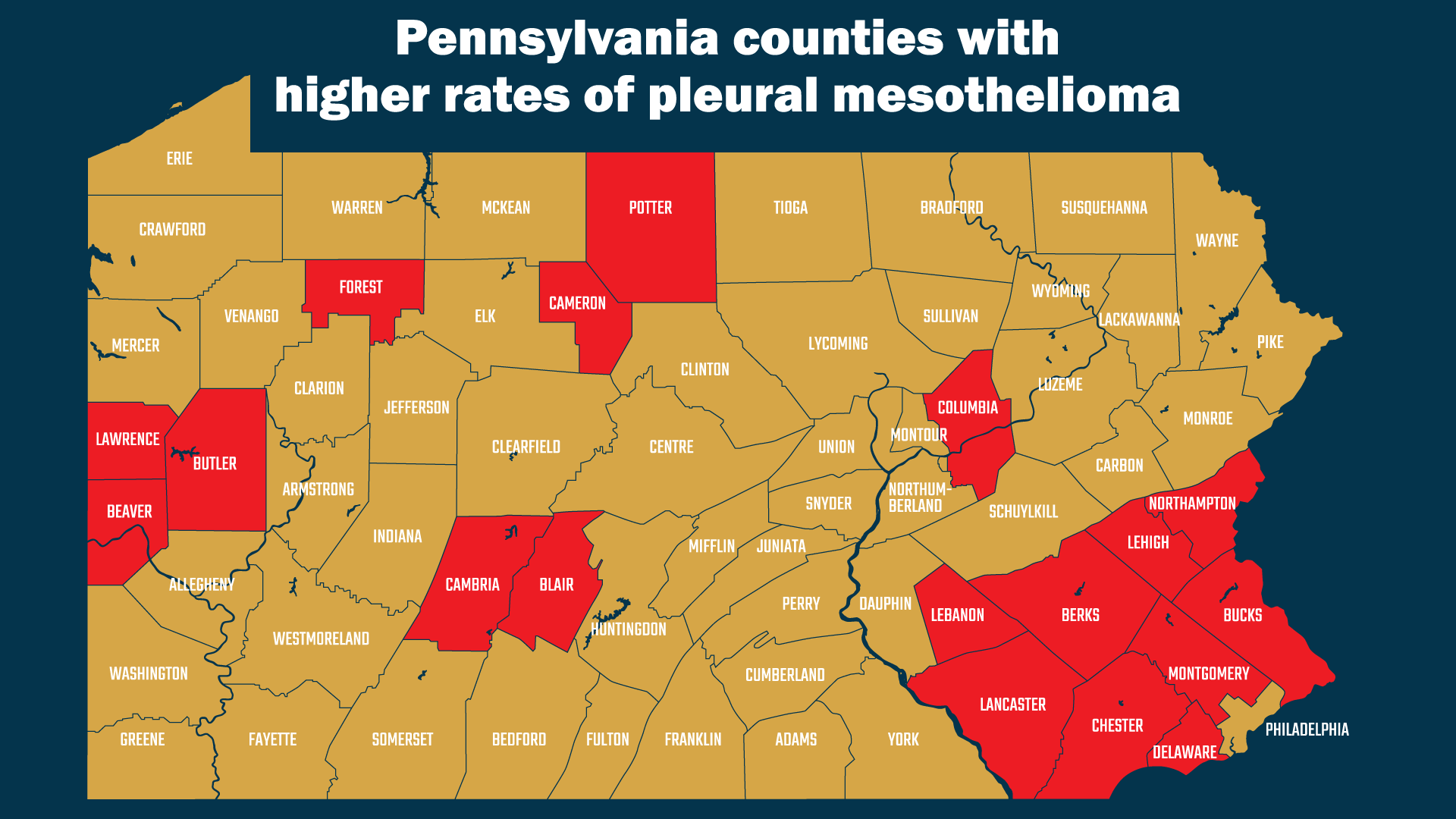
The study also mapped where mesothelioma cases occurred by county. Higher-than-expected rates of pleural mesothelioma were found in parts of southeastern and western Pennsylvania, including counties such as Delaware, Montgomery, Butler, and Beaver.
Some of these areas have well-documented histories of asbestos-related industries, factories, or contaminated sites.
Counties in Pennsylvania with an increased incidence of pleural mesothelioma
- Beaver County – Beaver, PA
- Berks County – Reading, PA
- Blair County – Altoona, PA
- Bucks County – Doylestown, PA
- Butler County – Butler, PA
- Cambria County – Ebensburg, PA
- Cameron County – Emporium, PA
- Chester County – West Chester, PA
- Columbia County – Bloomsburg, PA
- Delaware County – Media, PA
- Forest County – Tionesta, PA
- Lancaster County – Lancaster, PA
- Lawrence County – New Castle, PA
- Lebanon County – Lebanon, PA
- Lehigh County – Allentown, PA
- Montgomery County – Norristown, PA
- Northampton County – Easton, PA
- Potter County – Coudersport, PA
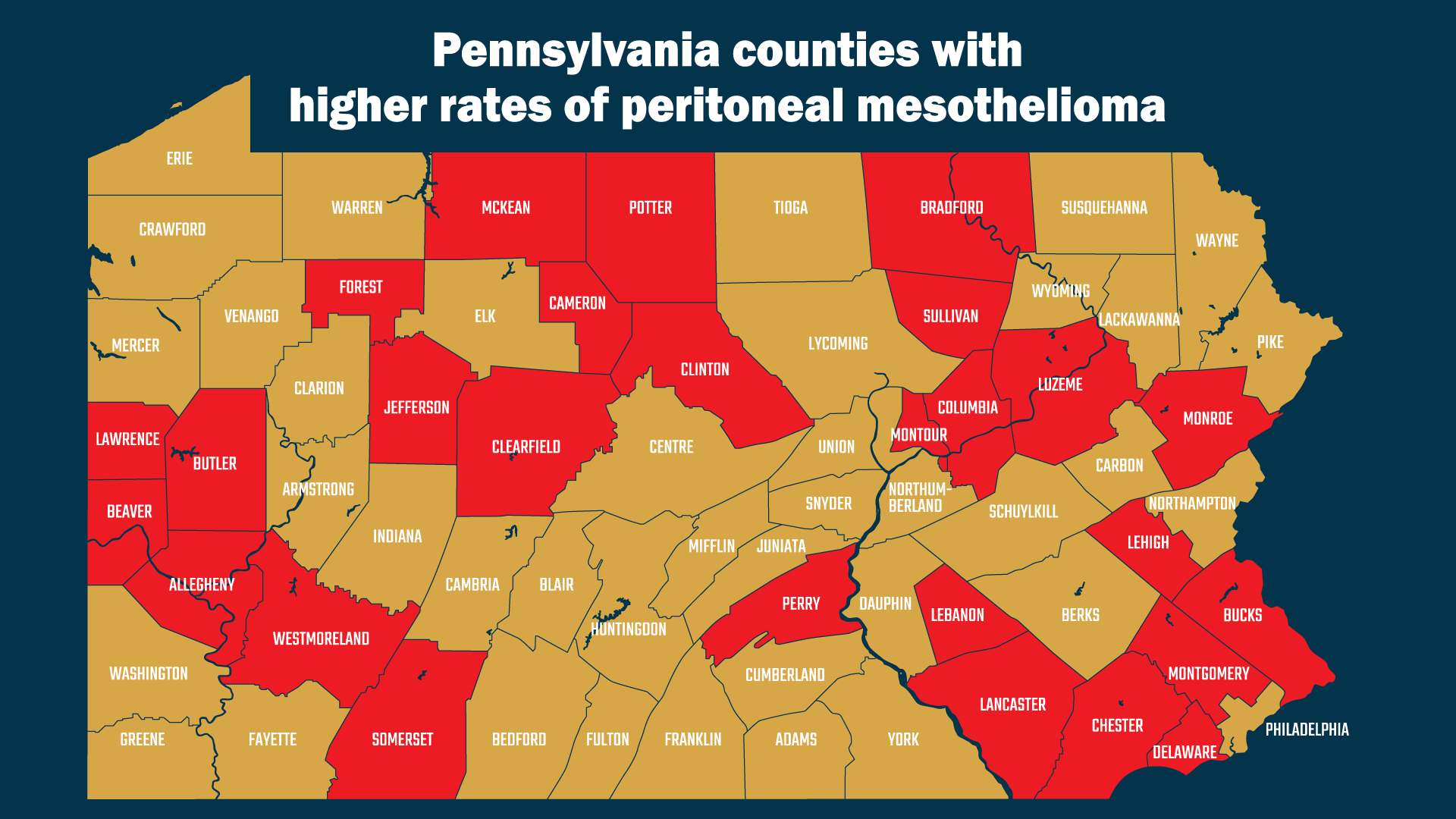
Counties in Pennsylvania with an increased incidence of peritoneal mesothelioma
- Allegheny, Pittsburgh, PA
- Beaver – Beaver, PA
- Bradford – Towanda, PA
- Bucks – Doylestown, PA
- Butler – Butler, PA
- Cameron – Emporium, PA
- Chester – West Chester, PA
- Clearfield – Clearfield, PA
- Clinton – Lock Haven, PA
- Columbia – Bloomsburg, PA
- Forest – Tionesta, PA
- Jefferson – Brookville, PA
- Lancaster – Lancaster, PA
- Lawrence – New Castle, PA
- Lebanon – Lebanon, PA
- Lehigh – Allentown, PA
- Luzerne – Wilkes-Barre, PA
- McKean – Smethport, PA
- Monroe – Stroudsburg, PA
- Montgomery – Norristown, PA
- Montour – Danville, PA
- Perry, New Bloomfield, PA
- Potter – Coudersport, PA
- Somerset – Somerset, PA
- Sullivan – Laporte, PA
- Westmoreland, Greensburg, PA
Peritoneal mesothelioma showed a more scattered pattern, with some overlap in the same regions but greater variation overall. In smaller counties, case numbers were very low, so those results should be interpreted cautiously.
Occupational asbestos exposure in Pennsylvania
The following are some of the Pennsylvania companies where workers were exposed to asbestos:
- Allegheny Ludlum
- Armco Steel
- Babcock & Wilcox
- Edgar Thomson Steel Works
- Fisher Scientific
- LTV Steel (fka J&L Steel)
- Neville Chemical Co.
- S. Steel
- S. Steel (Duquesne Works)
- Westinghouse
About mesothelioma and asbestos
Mesothelioma is a rare but aggressive cancer caused by asbestos exposure. It usually develops decades after contact with asbestos, making it difficult to track and prevent.
What this means going forward
The findings show that asbestos exposure continues to affect Pennsylvanians decades after its peak use despite regulations currently in place – an indicator that environmental asbestos exposures continue. The rise of peritoneal mesothelioma among younger people and women also raises new questions about non-occupational exposures and potential improvements in detection.
Researchers emphasize the need for continued monitoring, better understanding of non-occupational asbestos risks, and targeted public health efforts in higher-risk communities. Increased awareness among healthcare providers and the public may also help improve diagnosis of this rare cancer.
Together, these insights help explain how Pennsylvania’s industrial past continues to shape health outcomes today, and why vigilance around asbestos exposure remains important.

Related Posts
Belluck Law Wins Motions in Mesothelioma Case Involving Asbestos Exposure from Talcum Powder and Cosmetic Products
September 24, 2026
What the Newly Published 2026 NCCN Guidelines Mean for Mesothelioma Patients
September 11, 2026