Italy’s study provides evidence of positive impacts of an asbestos ban
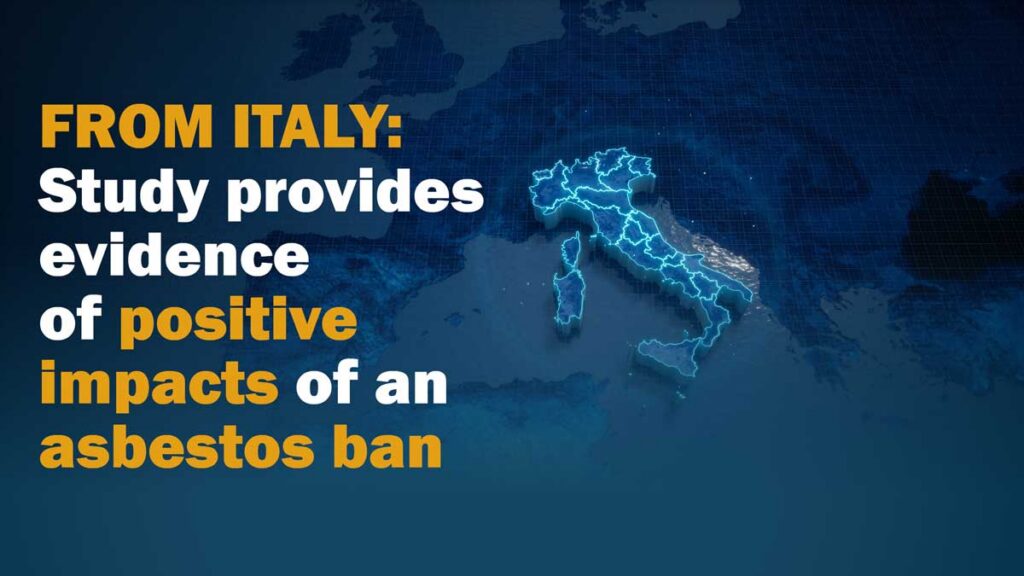
A recent study examining the long-term impact of Italy’s 1992 asbestos ban provides compelling evidence that the policy has significantly reduced mesothelioma mortality while also reshaping patterns of asbestos exposure. Drawing on decades of national data, researchers analyzed both mortality trends and detailed case records to understand how the ban influenced public health outcomes and how exposure risks have evolved over time.
About mesothelioma
Table of Contents
Mesothelioma, a rare and aggressive cancer caused by exposure to asbestos, has a notably long latency period, often developing more than 40 years after initial exposure. This delay makes it difficult to immediately assess the benefits of regulatory actions such as asbestos bans. To address this challenge, the study combined historical asbestos consumption data with mortality records from 1970 to 2020, using advanced statistical modeling to estimate what would have happened if asbestos use had continued.
Impact of the asbestos ban
The findings show that Italy’s asbestos ban has had a substantial and measurable impact. Between 1992 and 2020, the number of mesothelioma deaths avoided due to the ban is estimated to range between 8,341 to 21,981, depending on different hypothetical scenarios of continued asbestos use. These estimates were derived by comparing actual observed deaths with modeled projections of what mortality might have looked like without the ban.
During the same period, actual recorded mesothelioma deaths totaled 28,844. In contrast, projections suggested that deaths could have reached as high as 50,825 under certain scenarios without the ban. This stark difference highlights the significant public health benefit of eliminating asbestos production, importation, and use.
Italian mesothelioma registry data
In addition to mortality analysis, the study leveraged Italy’s national mesothelioma registry, which collected 37,003 cases between 1993 and 2021. This registry enabled researchers to examine how the sources and contexts of asbestos exposure have changed over time.
One of the most notable findings is a shift in the types of exposure associated with mesothelioma cases. In the early years of observation (1993–1996), 11.3% of cases were linked to direct asbestos use in industries such as mining, asbestos-cement production, and textile manufacturing. By the period from 2017 to 2021, that figure had dropped to just 3.2%.
At the same time, other forms of exposure have become more prominent. Cases associated with the construction sector increased from 12.9% to 21.4% over the same periods, while those linked to unexpected or atypical exposure rose from 11.3% to 17.0%. These trends reflect a broader transition away from traditional industrial exposure toward risks associated with existing asbestos in buildings and less obvious environments.
The study situates these findings within a broader framework often described as “waves” of asbestos-related disease. The first wave was tied to workers directly involved in asbestos extraction and manufacturing. The second involved individuals who used asbestos-containing products in various industries. The third, which appears increasingly relevant today, is associated with the deterioration of asbestos-containing materials in buildings, leading to exposure during maintenance, renovation, or demolition activities.
This third phase is particularly concerning because it affects a wider and less predictable population. Workers in construction and maintenance, as well as residents and occupants of older buildings, may be exposed without realizing it. The study’s findings support this concept, showing rising contributions from construction-related and unexpected exposure categories over time.
Differences between men and women in mesothelioma development
The analysis also revealed important differences in exposure patterns by sex. Occupational exposure accounted for 81.5% of cases among men but only 34.1% among women. Women were more likely to experience familial or environmental exposure, such as living with someone who worked with asbestos or residing near contaminated sites.
Geographic differences
Geographically, mesothelioma cases were not evenly distributed but tended to cluster in specific areas, reflecting historical industrial activity and environmental contamination. All categories of exposure showed significant spatial aggregation, indicating that localized sources of asbestos exposure continue to influence disease patterns.
Despite its strengths, the study acknowledges several limitations. The long latency period of mesothelioma complicates efforts to reconstruct exposure histories, and about 20% of cases had uncertain exposure sources. Additionally, the national registry’s regional structure means that data completeness varied over time and across locations.
Even with these limitations, the overall conclusions are clear. Italy’s asbestos ban has prevented thousands of deaths and represents a major public health achievement. The findings also suggest that the benefits likely extend beyond mesothelioma to other asbestos-related diseases, although those effects were not directly quantified in this study.
Looking to the future
Looking ahead, the study predicts that mesothelioma incidence and mortality will gradually decline, though challenges will remain. Identifying exposure sources may become more difficult, and cases may become more geographically dispersed. At the same time, the growing importance of construction-related and unexpected exposures underscores the need for targeted prevention strategies.
Ultimately, this research provides strong evidence that banning asbestos leads to meaningful reductions in disease burden. It also highlights the importance of continued vigilance, particularly in managing the risks posed by asbestos still present in existing buildings. For countries that have not yet implemented a ban, the Italian experience offers a clear example of the long-term health benefits such policies can achieve.

Related Posts


A study into the experience of caregivers yields first findings
January 13, 2026